In 2024, Drake and The Weekend went viral on TikTok with an AI-generated song they didn’t write, sparking an existential question: what happens to creativity when AI art sounds as real—and as compelling—as human work?
At McDaniel College, reactions are mixed. “I think AI is the future, I think people are stupid to not use it and I think that there is going to be a point where it is the smartest thing in the world, Its definitely gonna get scary when it starts taking away jobs. I do not think that there will be more jobs to be formed through AI,” Cullen Brown said, a third- year business administration major. “My ideas are still mine. AI just helps me reach them faster.” his view reflects a growing trend: students are willing to collaborate with AI, but they don’t want to lose authorship.
The debate over whether AI can be truly “creative” is no longer hypothetical. It is becoming our new reality, and we are watching it unfold in real time. Jo Marchant, an author and New York Times best-selling science writer, argues in Nature that “from poetry and video to ideas and music, AI-generated content now rivals many human-made works, meaning that the standard scientific definitions of creativity struggle to distinguish between people and computers.”
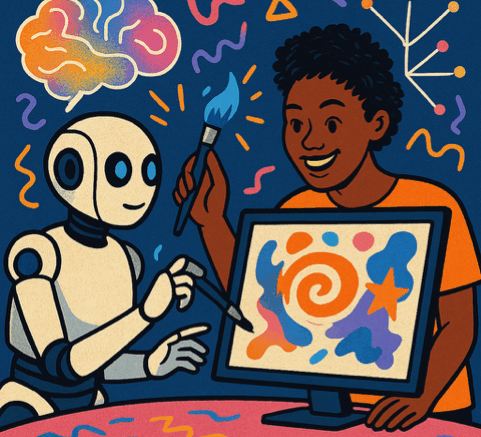
With AI tools like ChatGPT, Midjourney, and Sora entering everyday life, students and artists alike are now confronting an unsettling shift: technology is no longer just assisting creativity—it is actively participating in it.
Machines can generate images, music, and stories at remarkable speed, but they still lack a key dimension of creativity: lived human experience.
Psychologists Zorana Ivcevic and Joey Grandinetti explain that “the introduction of an additional participant can greatly contribute to the success of brainstorming sessions by expanding the solution space and supporting the diffusion of ideas.”
AI can open creative pathways and expand possibilities, but it cannot replace the human impulse—emotion, intention, memory—that gives creativity meaning. For students of writing and design at McDaniel College, AI may inspire new approaches, but the voice behind the work remains distinctively human.
As artificial intelligence becomes more embedded in writing, art, and journalism, new complications emerge—especially regarding ownership and authorship. If an AI generates an image or drafts a paragraph, who deserves the credit: the user, the company that built the model, or the artists whose work trained it?
In journalism, this question becomes even more urgent, where accuracy, accountability, and transparency are not optional—they are requirements. The World Economic Forum notes that recent initiatives “spotlight the need for ethical and respectful AI deployment while fostering partnerships that prioritize consent, transparency and fairness.” These issues land directly in college classrooms, where students must now learn not only how to create, but how to responsibly navigate digital tools that blur the boundaries between originality and replication.
As AI reshapes how we write, design, and imagine creative work, one truth becomes clear: technology does not have to diminish the human voice. Used responsibly, AI can amplify it. For students, artists, and journalists, AI can foster more innovative and accessible work—but the responsibility for its ethical use rests on us, not the algorithms. The real challenge is preserving authenticity, emotion, and lived experience in a world where machines can mimic everything except the human spirit.
Maybe the question isn’t whether AI can create. It’s whether we still recognize—and are willing to protect—what makes human creativity irreplaceable. What do you think?