
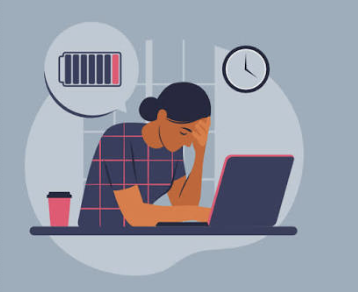
Westminster, MD– It is a constant cycle to almost every student on campus: a huge mounding pile of assignments, another pressing deadline, and a sudden, paralyzing wave of anxiety. For many at McDaniel College, the drive to maintain a high GPA is no longer just about academic pride, but a high stakes battle that directly impacts their mental health and self-image.
As students increasingly struggle to balance a heavy academic workload with basic self-care, a critical question arises: How do you remain academically driven without losing your sense of self-worth?
The Signs of Drowning
Recognizing when a student has crossed the line from “hardworking” to “burn out” can be very difficult, as the symptoms are often silent and quiet.
Kalen Watts, a Junior Communication major who works closely with the McDaniel Wellness Center, specifically being a part of PEEP, notes that burnout rarely looks like a dramatic outburst. Instead it manifests as a quiet withdrawal.
“I think a common sign is a general sense of apathy. When there’s so much going on in one’s brain, it’s easy to discard various things in an attempt to ease stress. Changes in hygiene, changes in social interaction, etc, can all go unnoticed or simply disregarded as something everyone goes through, leaving the struggling student to ‘drown.’”
The feeling of being drowned frequently leads to academic paralysis. Kasey Reshnet, a Senior Fine Arts major with an Education minor, experiences this at firsthand.
“ I put a lot of pressure on myself to do well in school, especially while balancing work, internships, and everything else.” Reshnet shares. “ Sometimes I get so overwhelmed that I literally freeze and end up not doing anything, even when I know I have things to get done. then I get stressed about falling behind, which makes it even worse.”
High Stakes and Toxic Comparison
Why do college students feel so much pressure to tie their entire being and human value to a letter grade? According to Watts, the pressure is integrated into the harsh reality of higher education in America, where one’s financial survival is depicted and linked to academic performance.
“We live in a country where GPA unfortunately means much more than how well you do in class,” Watts explains. “Many scholarships and financial aid are tied to academic performance, making grades seem like “life or death” to many students. One bad grade doesn’t just mean a student needs more support, it can mean a loss of funding for their studies.”
Aside from financial stress, campus life and culture itself has bred a competitive almost rivalry like atmosphere. “Competition is also a large part of this,” Watts adds. “Many students compare themselves to others who seem to always have good grades, or have parents/family who do so. Comparison so easily steals happiness.”
This sort of competitive drive often pushes students past their physical limits. Lacey Dustin, A Senior Fine Arts major and Education minor, admits to making sacrifices frequently made at the loss or lack of sleep. “I often stay up too late working on my assignments and have pulled all-nighters before, especially for large art projects or personal projects,” Dustin says. “I try to get as much done as I can and sleep when I know it is out of my control.”
Redefining “Self-Love” on Campus
Breaking the cycle requires shifting what self-care means away from massive, unattainable lifestyle changes to instead focusing on micro-habits and psychological boundaries.
Watts suggests that students take it down a bit or to lower the bar to what they consider “self-love” during the peak of high and intense stress weeks. “I think self-love starts small; taking a walk, taking a five-minute break while studying, stretching, drinking a sip of water, and so on,” Watts explains. “The small things build up and can make one feel better. It’s also easier and less overwhelming compared to a massive spa day.”
For seniors preparing to enter their choice in the workforce, gaining perspective on the true value of a GPA brings its own form of relief.
“I try my best to set limits and stop when I need to for academic assignments,” Dustin says. “I used to put much more pressure on myself but senior year makes me realize how little a 4.0 really matters once I have a post-grad job.”
Learning to let go of academic guilt is always going to be an ongoing process, but it remains something crucial for long term peace of mind. As Reshnet explained: “I’ve been trying to stop feeling guilty when I take time for myself. School is important to me, but it can’t be my entire life. I’m learning that it’s okay to put things down for a little bit and focus on myself.”
For students who are feeling severely burnt out or have the sense of being “frozen”, the McDaniel Wellness Center offers a multitude of safety nets. All students are entitled and welcomed to the eight free counseling sessions per the academic year. The Wellness Center provides on-call and after-hour counselors, as well as community events each week to give students a fun and low pressure way to decompress and take their minds off of their workloads.