
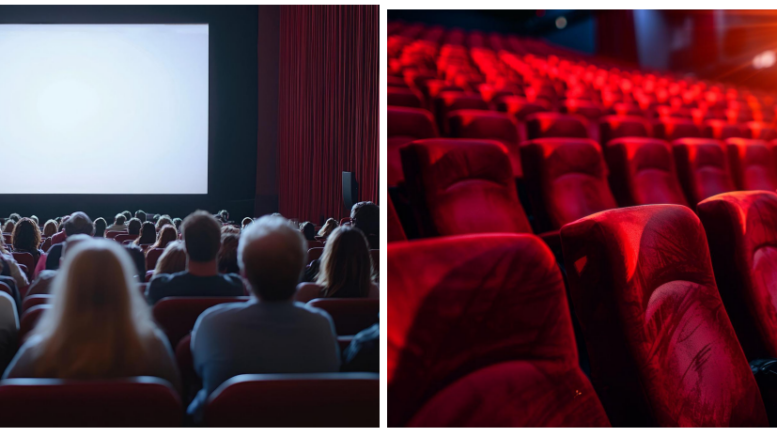
Nicole Kidman’s AMC spiel says it all: “We come to this place…for magic. We come to AMC
theatres to laugh, to cry, to care.” It is a beautiful, profoundly necessary confession of why cinema
matters. For over a century, the experience of gathering in a movie theatre has been an intentional
decision to leave our separate lives at the door and slip into a collective dream. There is almost an electric stillness that permeates an auditorium right as the house lights die and the previews begin. But step outside the fresh popcorn scented bliss of the lobby and look at the soulless corporate priorities rebuilding Hollywood, and you can see that years of shared cultural foundation is fracturing faster than we can stop it.
The intuitive way we process authentic human stories is undergoing an alarming mutation. We are
trading the muddled, unpredictable magic of authentic experiences for the sterile convenience of an
algorithmic feed. As theatres everywhere hollow out and automated code creeps into creative rooms, we face the real heartbreaking cultural question: Lights, camera, action? More like Prompt, generate, render.
This corporate threat of artificial intelligence in filmmaking is not some distant, sci-fi subplot
from the “War of The Worlds.” It is a bruising, immediate street fight for the survival of authentic human expression. Generative tech models are being rushed out by studios to churn out full screenplays, and stitch together hollow digital extras to manipulate audiences on a budget. 21st-century Hollywood executives have resorted to treating human imagination like an automated factory line, fully prepared to automate the blood, sweat, and genuine tears of living creators out of existence.
Buying a ticket to a movie entirely written by a chat bot feels like a visceral betrayal of the
directors we love. “I don’t think so as it would feel like a betrayal to my favorite director,” McDaniel
parent Marcus Ford explained when asked if he would buy a ticket for an AI written script.
While a computer program can likely determine the clinical data of what makes a person cry, a
capability where many agree “this capability already exists, ”we completely lose the soul of the craft when cold code completely replaces live-action talent that has grinded away for years to develop their skills. We see this threat breaking into reality with the rise of synthetic creators and digital casting models like Tilly Norwood, a completely AI generated actress designed to look and move like a real human being. When asked by CNN if she deserved to win an Oscar, Tilly responded, “Yes, but I’d certainly campaign for our own AI categories.” Facing a screen occupied by a digital facsimile takes away from the pure authenticity of films and the talent that goes into creating them. It is terrifying because it opens the floodgates for an unknown wave of synthetic media that offers absolutely zero benefit to the real human beings who put their time and effort into creating original work.
This is exactly why labor unions like SAG-AFTRA are locked in a fierce, urgent battle to enforce
strict guardrails on performer consent and digital replicas. If a machine implements a film, it is just an
algorithmic product with nothing behind it. The beauty of true art is born out of the demand for human direction at the helm of creativity. The cultural danger of allowing data-driven algorithms to decide which stories get greenlit is catastrophic. “Data-driven algorithms typically do not include culture or nuance, or feeling and creativity,” a junior Communication major warns. The algorithms would greenlight the types of stories that have made money in the past which would result in no new types of stories …no creativity…no new truly original stories. “Without a completely humanistic approach, we lose sight of the vital connection between the creator’s soul and the viewer’s heart,” says sophomore movie aficionado Katherine Ramirez.
There is absolutely nothing like walking into your local movie theatre, seeing all of the new
release posters, and getting chills up your spine as you admire your favorite actors and actresses blown up faces. You can’t help but dream and imagine yourself on those posters one day. The familiar, powerful smell of buttered popcorn. The whir of the slushie machines. The anticipation you feel in your stomach as you wait in line to get your ticket scanned and head to theatre 3 on the right are irreplaceable. You choose where you want to sit and how you want to experience the journey you are about to go on, because after all, whether you are sitting in the very back or very front, or on the right or left matters. 3D or not 3D? How could that possibly be replaced by the influx of streaming services? Straight-to-video existed at the same time movie theatres were at their peak, but there was a clear distinction between the two, and you knew what a true theatrical experience was. You leave feeling changed or more inspired than when you arrived. Pure giddy takes over and suddenly you want all of the merchandise available just to live inside that universe a little longer and imagine yourself in your favorite character’s shoes.
By hollowing out these physical spaces, production companies completely lose the grandiose
nature of indirect communication from moviegoers that they thrived on before. People still discuss
cinema, but on a much smaller, fragmented scale online than when communities go to the theatre and experience it all together on the big screen. Because of this, entertainment corporations are losing out on shared cultural momentum in a huge way. While corporate greed rewrites how movies are built, streaming apps and services are quickly starving out the theatres where these stories are meant to be felt. The truth is, our lack of interest in going to an actual movie theatre is flattening our emotional lives. The weight of a cinematic experience has been reduced to domestic background noise.
It absolutely doesn’t give us the same depth. When you shove a movie onto a secondary screen,
the gravity of the story completely evaporates. You lose the forced focus of a dark room. The collective
gasp at a shocking jumpscare. The silence and tears of a tragic climax. Because, as Nicole Kidman
stated, “We need that, all of us, that indescribable feeling we get when the lights begin to dim. And we go somewhere we’ve never been before; not just entertained, but somehow reborn. Together.”
This isolation runs way deeper than just losing out on theater popcorn and candy, which some
people claim is psychological marketing because “popcorn is popcorn,” but others swear tastes entirely
distinct. “I have eaten popcorn out of the theatre and to tell you the truth for some reason it doesn’t taste as delicious as when I’m in the theater. I don’t feel it’s psychological,” Keyon Price insisted.
The real issue is that social media has completely hollowed out human interaction. We don’t take
the time to sit down and experience distinct cultures or conflicting opinions anymore. “Technology(social
media) has forced the decline of many in-person cultural rituals. I believe it is a major societal issue.”
“Leaving a screen playing as background noise reduces the ability of technology born generations
considerably and it will take a concentrated effort to reverse this trend,” an AMC Theatre’s employee
explained.
Yet the hunger for real connection is still there, and major exhibition chains like AMC Theatres
are trying to remind us of exactly what we are losing. “I like watching movies especially with other
people in the theater because you’re sharing an experience together in real time. This is especially true
when you see a movie on opening night,” McDaniel mom Myra Ford mused. Local movie theaters are
vital meeting spaces outside the dorms. Low-stakes environments where you can go to have fun with
anyone, fostering stronger friendships and allowing large groups to connect. “If movie theaters left
college towns we would lose an important meeting space because you can have a larger group go to a theater then just watching it in a dorm,” sophomore Sophie Page rationalized.
The memories of the theater are sensory and permanent, no matter your age. They live in the
nostalgia of seeing Jaws for the first time in a room smelling of popcorn, cotton candy, and pizza, or being completely glued to the screen during The Texas Chainsaw Massacre where “all I could smell in the theater was fear and popcorn. Everyone was glued to the screen and scared,” McDaniel grandparent Vicky Henderson recounted. You simply cannot recreate that raw human impact while huddled in bed with a cold bottle of water, watching a laptop screen ready for sleep.
The battle for the soul of film will not be decided by tech executives, but by our own daily habits.
It takes a conscious decision to reject the endless scroll, leave our houses, and buy a physical ticket. We
cannot afford to let that collective authenticity slip through our fingers just for the convenience of viewing on a smaller screen.
Life Without Movies? What would your world look like without
the magic of the silver screen? Explore multimedia generation
profiles, exclusive labor union insights, and more. Join the movement
to keep human cinema alive at thereel-talk.com.